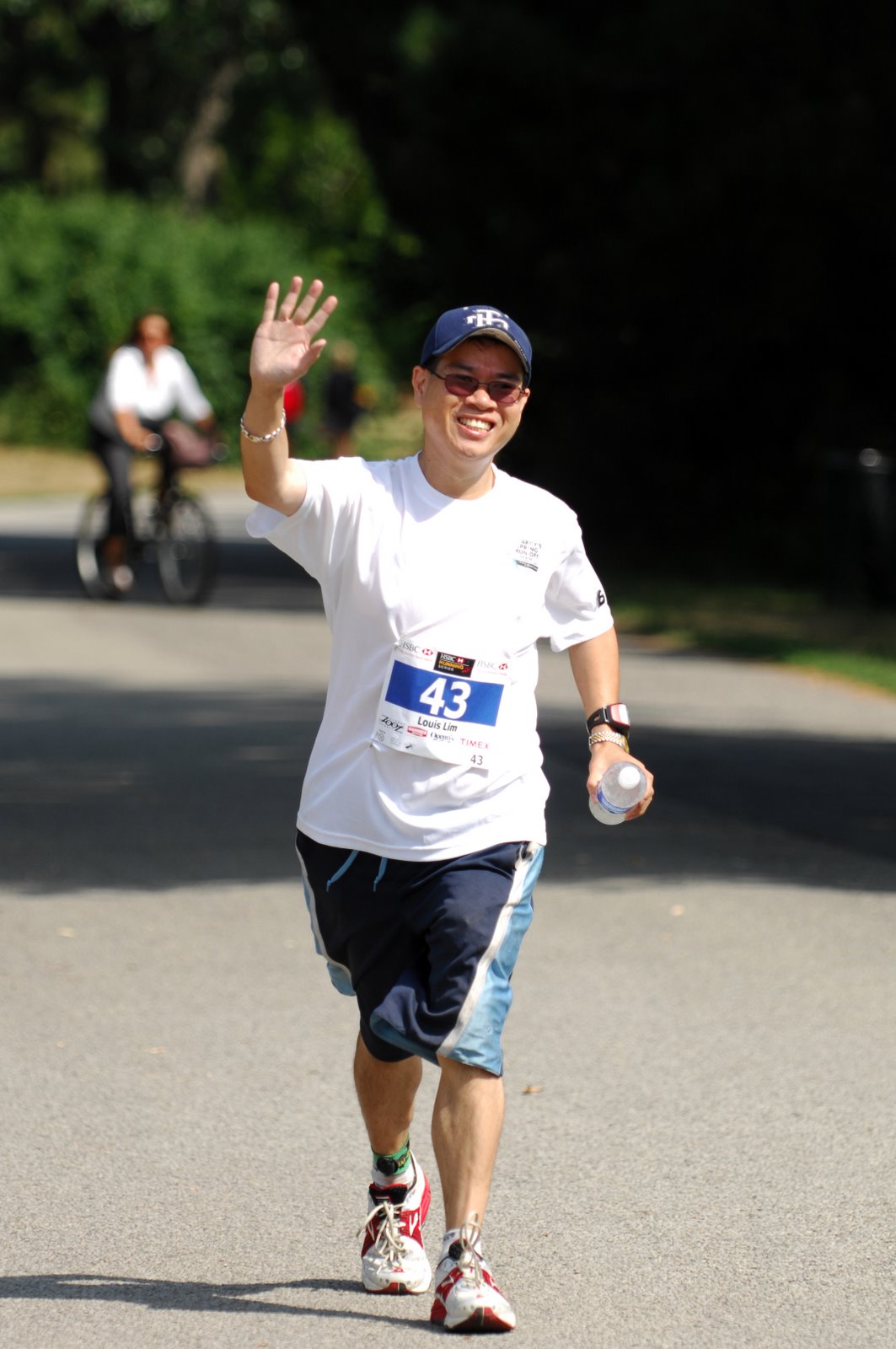
Found on the www.runningmania.com forum. Very interesting study!
Marathon heart attacks: new data
January 13th, 2012
There’s a big new study out in the New England Journal of Medicine that takes a comprehensive look at every case of cardiac arrest during every marathon or half-marathon in the U.S. with more than 100 participants between 2000 and 2010. It’s being widely covered in the press; you can read a good summary in the New York Times or in the Globe and Mail, among other places. The primary message: these events are rare. There 59 cases of cardiac arrest, of which 42 were fatal. That translates to a 1 in 259,000 chance of dying, which is much lower than previous reports and than many other sports.
I’m actually in Houston right now for the U.S. Olympic Marathon Trials, and it happens that Aaron Baggish of Mass General, the senior author of the study, was giving a talk this morning to the members of the World Road Race Medical Society — so I popped in to hear what he had to say. A couple points he made that I found interesting:
Weather wasn’t a factor. The average starting temperature during events where someone suffered a heart attack was almost identical to the 10-year average (55.9 vs. 55.5 F), and the average deviation was just 0.3 degrees.
For 31 of the cases, they were able to track down either the survivor or the next-of-kin and get full medical records, autopsy results, and running history — so this allowed them to really look at the causes of death in detail. One of the surprises is that none of the runners died from a ruptured plaque producing a blood clot, which is (or at least was) thought to be one of the possible mechanisms of sudden death in athletes. The problem with ruptured plaques is that they’re hard to predict in advance. But if underlying coronary artery disease is the real problem (more on that in a sec), then pre-exercise cardiac screening should be able to pick some of that up, Baggish argues.
The average age of the people who survived cardiac events was 53; the average age of the people who died was 34. There are two distinct groups here. One is young people with thick hearts (“hypertrophic cardiomyopathy”), an underlying genetic conditionl; when they collapse, they’re very hard to revive and tend to die. The other is older men with narrowed arteries (coronary artery disease) due to the usual risk factors; when they collapse, they can often be revived if someone gets to them soon enough.
That brings me to one of Baggish’s key point: the absolute best predictor of whether someone would survive cardiac arrest during a race was simple: did a bystander start CPR immediately, before paramedics got there? The lesson is simple: we should all — runners, family members, spectators, heck, everyone in society — have basic CPR training. It could make all the difference to someone, including you.
Baggish’s overall message: running (and by extension, other aerobic activity) is generally safe — but it doesn’t give you immunity from heart disease. That means that everyone, and particularly older males, should be alert for warning signs and not ignore them. Some key ones:
•a burning sensation in the chest (could be confused with acid reflux) that comes on when you start running then gradually fades away, and keeps recurring;
•breathing more heavily than you’d expect given your effort;
•persistent, unusual fatigue.
None of these risk factors necessarily mean something is wrong, but they can be a signal that it’s worth checking in with your doctor to see is you’ve got coronary artery disease that needs to be addressed before racing a marathon.
Last point. Previous studies have shown that most marathon race deaths occur in the final mile or at the finish; this study confirms that. The implication: if you have reason to worry about your heart’s health and want to minimize that risk, think twice about your final sprint.
Saturday, January 14, 2012

20 K in cold weather
What a difference from last weekend. Today is -10C feeling like -18C with windchill. Snowed Thursday and Friday so the snow was cleared on the main roads with some instances of ice. But marathon is on May 6th so no excuse not to run. Could be worse - could be running in snow. Very pleased to have run 20 K (original goal was 15 K). Ran east on Queen Street and then back home. Saw a few runners out there as well as a few dogs (1 wore boots while a few wore sweaters).
Broke my New Year's Resolution to have 3 runs in a week. Regretful not being able to run on Wednesday as the weather was nice but work was busy. Will try again next week. Hope next Saturday will be cool -- hoping to up to 25 K.
YTD = 55 K
Broke my New Year's Resolution to have 3 runs in a week. Regretful not being able to run on Wednesday as the weather was nice but work was busy. Will try again next week. Hope next Saturday will be cool -- hoping to up to 25 K.
YTD = 55 K
Tuesday, January 10, 2012
5 K
Got in a 5 K run after I left work at 7 PM. "Forced" myself to stay on schedule. Nice weather: 5C outside. Ran south on Yonge from the top of Hoggs Hollow to just north of Eglinton and then back. Great to run to clear the tired mind.
YTD = 35 K
YTD = 35 K
Saturday, January 7, 2012
LSD = 20 K
Wow! What weather for January 7, 2012: +8C, sunny. Ran on the Martin Goodman trail west to the Humber River Bridge and then east to Parliament Street. Quite a few people running, biking, and walking their dogs. Got in 20 K. Only took 500 mL water bottle - should have taken Gatorade - as I felt tired in the final 5 K (that stuff really works!). Legs felt tired but no aches or pains (thank goodness!).
This week = 30 K
YTD = 30 K
This week = 30 K
YTD = 30 K
Friday, January 6, 2012
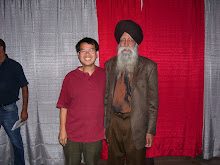
Fauja Singh almost 101 years old
Great to see this article. Heard Fauja Singh has the legs of a 35 year old. I have an 11x14 photo hung in my office. Students and staff recognize Singh. He definitely is a celebrity!
At 100, Fauja Singh Isn’t Done Marathoning
Updated: Jan 5th 2012 11:43 AM UTC by News
He doesn’t own the world record, but that isn’t bothering him.
Fauja Singh isn't letting a record get in his way.
The Guinness Book of World Records may have turned down giving him an official recognition, but the world’s oldest unofficial marathoner, Fauja Singh, isn’t rattled. In fact, he insists on continuing to complete the 26.2-mile event despite his age.
On April 1, the Indian-born British citizen will turn 101.
Regarding the fact that the Guinness Book of World Records has given him the cold shoulder, Singh remains indifferent.
“I don’t even know the name of Guinness book, so why should I bother about it?,” he said, speaking through a translator. “My job is to run and I will continue to do that. Recognition by any book or agency will not affect my spirit towards running.”
Singh maintains that his age is accurate and challenges naysayers to check his government-issued passport. He even noted that Queen Elizabeth sent him a congratulatory telegram on April 1 last year.
Officials from Guinness came out to supervise Singh’s running of the Scotiabank Toronto Marathon last year, but say that Singh has failed to produce a valid birth certificate.

Wednesday, January 4, 2012
Wednesday 5K
Ran 5 K this morning. With windchill temperature is -8C. Although this sounds cold, it is nothing compared to yesterday's windchill temperature of -22C. Glad I didn't run yesterday! Even taking Bud around the block was tough. Have taken the little man on 3 walks already. Back to running...same route west and then east on College Street. Want to becareful with running on an uphill incline -- don't want any more injuries. Enjoying the holidays. Next run is Saturday -- scheduled for 20 K LSD.
YTD = 10 K
YTD = 10 K
Monday, January 2, 2012
First Run of the Year
First run of the year this morning -- cold and windy. Got in 5 K -- no issues. Saw quite a few dogs on the streets and they were wearing sweaters.
New Year's Resolution is to run 3 times a week -- and to make that work -- even with busy work schedule.
New Year's Resolution is to run 3 times a week -- and to make that work -- even with busy work schedule.
Subscribe to:
Posts (Atom)